
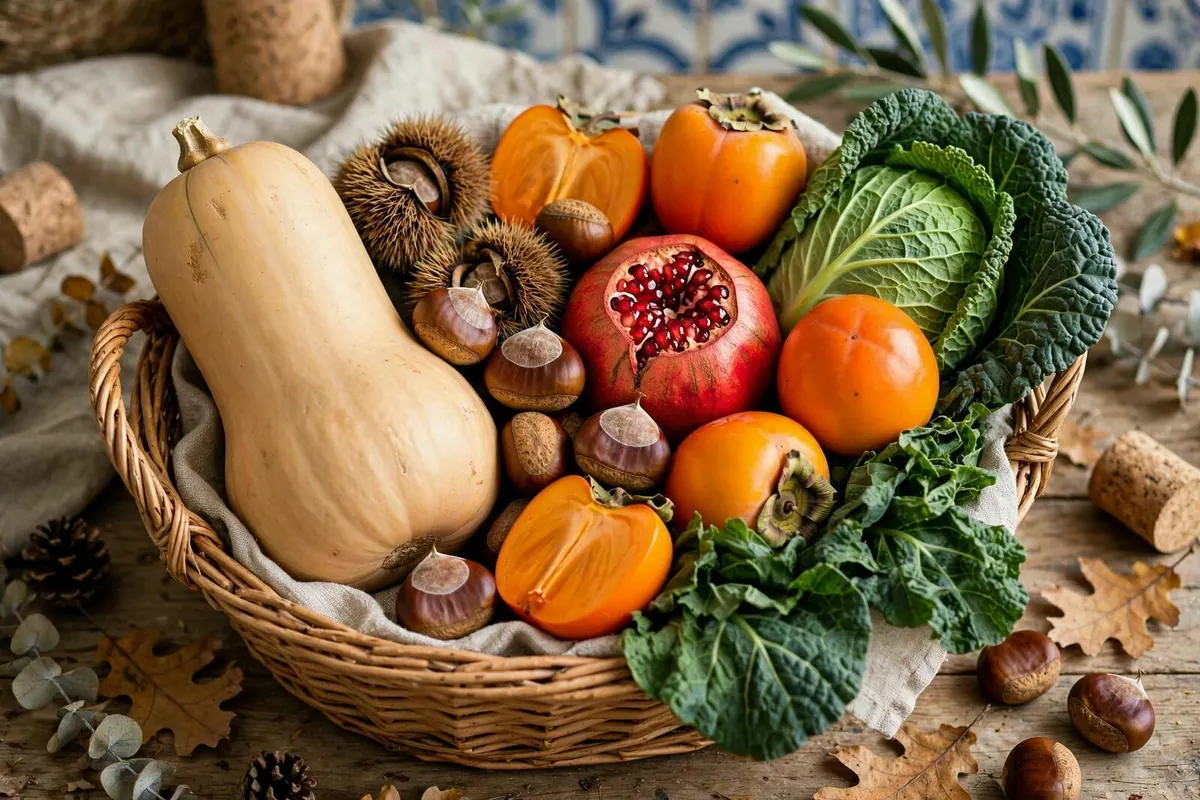
The end of summer is a transition: there are still good tomatoes on the stalls, but pumpkin, chestnuts and persimmons are starting to appear. Buying out of season tends to cost more and taste worse: it’s worth following the calendar.
This guide brings together the most representative seasonal products of October and November in Portugal, with storage suggestions and a few ideas for using them without waste.
October Calendar
- Butternut squash.
- Apple (varieties such as Bravo de Esmolfe).
- Chestnut.
- Pomegranate.
- Portuguese cabbage.
- Turnip greens.
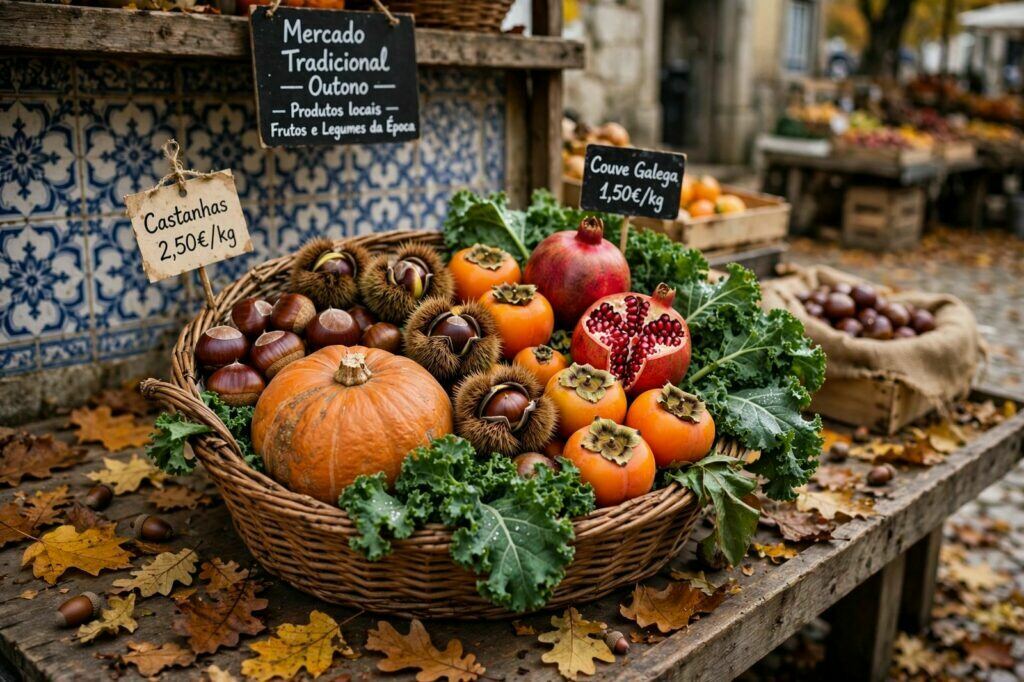
November Calendar
- Persimmon.
- National kiwi.
- Greens.
- Spinach.
- Pumpkin (continuation of October harvest).
- Algarve orange, at the start of the season.
How to store each product
- Whole pumpkin: keeps for about a month outside the refrigerator, in a cool, dry place. Once cut, it should be refrigerated and used within a few days.
- Chestnut: keeps well for about a week in the refrigerator, or can be frozen once roasted to last longer.
- Persimmon: at room temperature until ripe, then in the refrigerator to slow down ripening.
- Cabbage and turnip greens: in the fridge, in a perforated bag, to last a few more days without wilting.
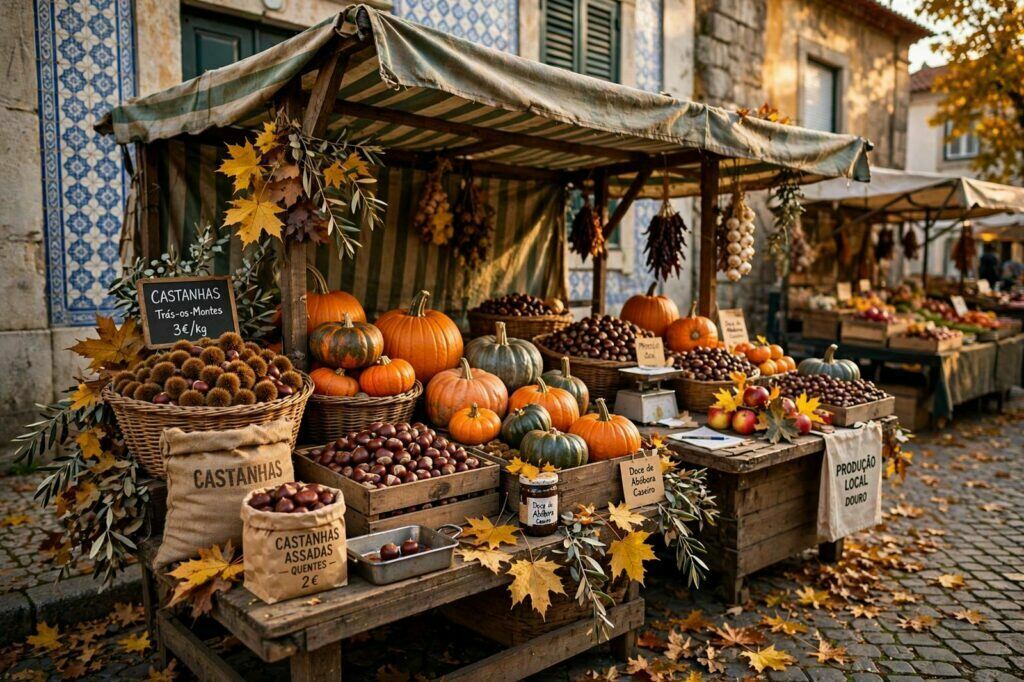
3 recipes to enjoy the season
- Pumpkin soup with lupin beans.
- This cheeky turnip greens rice with new olive oil.
- Oven-roasted persimmon with cinnamon, as a simple dessert.