
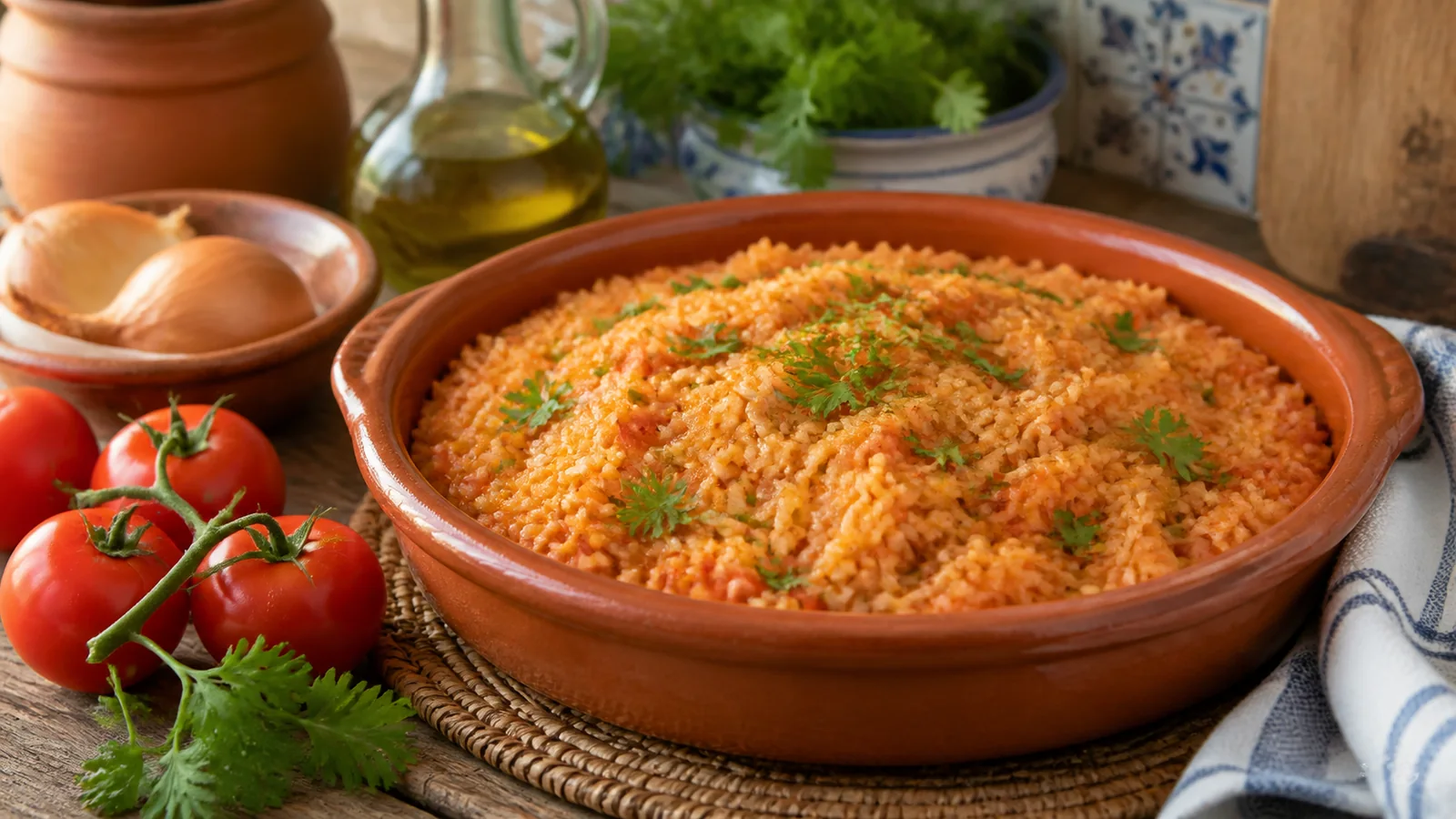
Same name, different schools. In Minho it’s served nice and creamy to go with rojões. In the Alentejo and Algarve it appears looser, almost asking for a wooden spoon to land on. The texture and the tomato explain the difference.
Tomato rice is a base dish, not a side note. It comes from thrifty cooking, with ripe tomato, onion and olive oil. The regional variation comes from the rice available, the seasonal tomato and the role it plays in the meal.
What stays constant
- Base sauté: finely chopped onion, generous but not excessive olive oil, optional garlic.
- Ripe tomato, peeled and deseeded for a smooth sauce, or with skin for a rustic version.
- Carolino or agulha rice depending on the texture you want. Carolino absorbs more and turns creamy. Agulha stays looser.
- Salt at the end, because the tomato reduces and concentrates.
Variations explained
Minho and Douro Litoral: rice quite creamy, almost a thick soup. Greenhouse or tinned tomato is used in winter, with stock. It serves to accompany pork or as a dish with egg.
Beiras: a middle ground, with bay leaf and pepper. Many households add bacon or chorizo, but the base version is vegetarian.
Alentejo: drier, with oregano and sometimes coriander. Served as a bed for migas or to use up well-ripened summer tomato, like coração de boi.
Algarve: with red onion, sometimes with cockles or razor clams when it turns into tomato and seafood rice, but that’s a different recipe with its own identity.
Which tomato to choose
- Summer: coração de boi or rama tomato, well ripened. Smells of earth, thin skin, sweet flesh.
- Rest of the year: good-quality peeled tomato in a glass jar, with no added sugar. It’s more consistent than fresh tomato out of season.
- Avoid tomato that’s still green or very acidic. If it’s acidic, simmer for 5 more minutes and add grated carrot instead of sugar.
The ideal texture, observed
- Creamy: grains still whole, stock covering them, the spoon leaves a slow trail. Ideal for serving straight away.
- Medium creaminess: stock almost absorbed, visible olive oil shine. Good for bringing to the table.
- Dry: loose grains, no liquid on the surface. Use agulha and less water, 1 to 2.
Starting ratio: 1 measure of rice to 2.5 of liquid for creamy, 1 to 2 for dry. Adjust according to the rice.
Mistakes that steal flavour
- Rinsing the rice too much → loses the starch that gives creaminess to the dish.
- Adding the tomato without sautéing it first → raw acidity.
- High heat all the way through → burns the bottom and leaves the grains undercooked on top.
Connection: this rice is a staple in our meal prep and pairs well with preserved herbs and plant-based protein.