
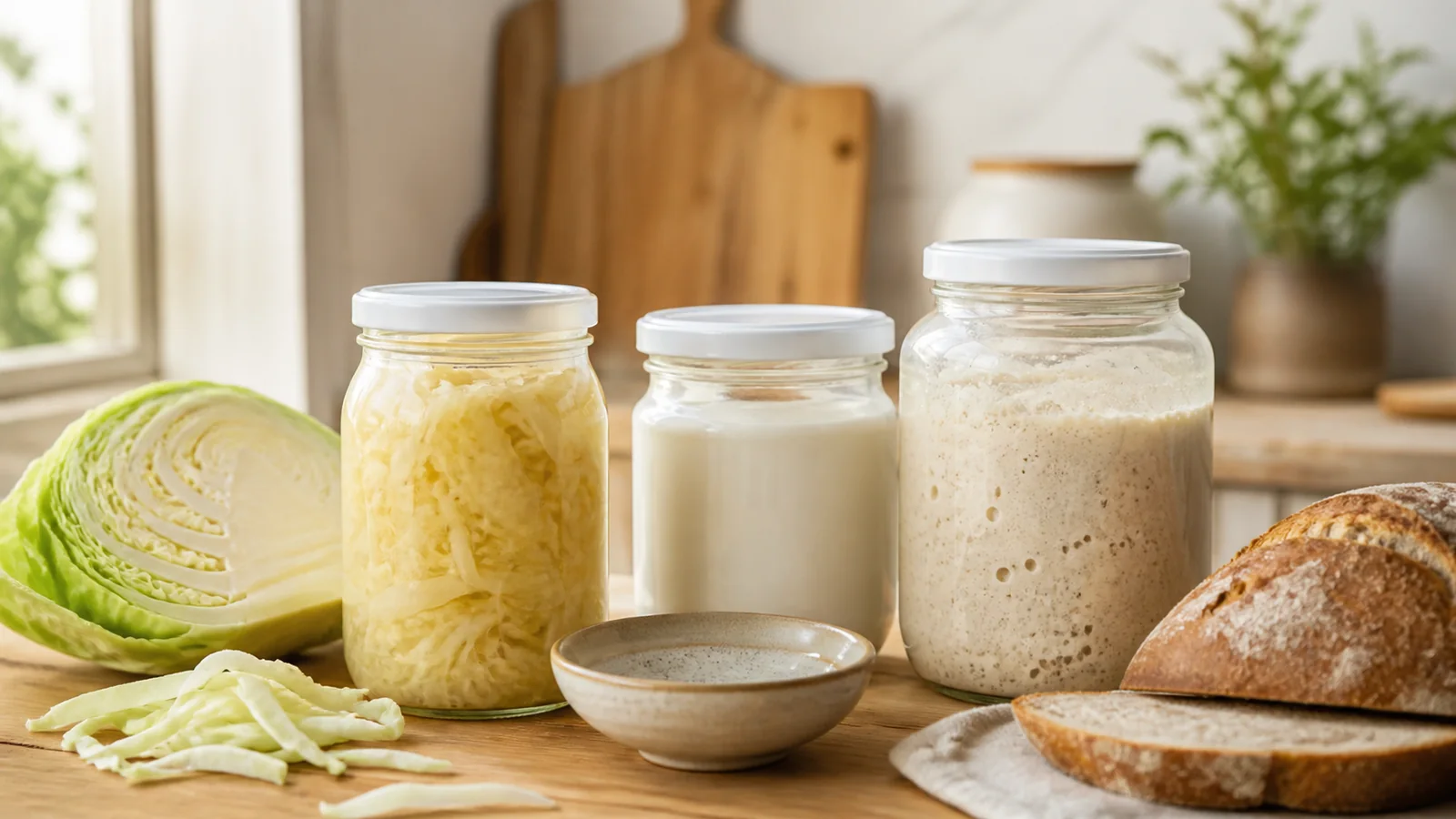
Fermenting is letting microorganisms work in our favour. At home, three fermentations are accessible without special equipment: levain for bread, cabbage for sauerkraut, and milk for yoghurt. They all need hygiene, controlled temperature and observation.
This guide makes no health promises. It describes technique, observable signs and when to discard.
Common safety rules
- Wash hands, bottles and utensils with hot water and detergent. Rinse in boiling water if possible.
- Use plain sea salt without anti-caking agent for sauerkraut.
- Keep fermentations covered but not completely airtight at the beginning, to allow CO2 to escape.
- If there is black or pink mould, or a putrefactive smell, discard. Do not scrape the top.
1. Simple Levain (7 days)
Mix 50g wholemeal flour + 50ml warm water in a jar. Cover with a cloth. Every 24 hours, discard half and feed with 50g white flour + 50ml water. On the 3rd day it should be bubbling and smell like sour yoghurt. On the 6th-7th day, its volume doubles in 6-8h at 24-26°C. It is ready.
Use 20% levain in relation to the flour in the bread recipe. The bread ferments more slowly, 4-6h first fermentation, but gains aroma.
2. Portuguese cabbage sauerkraut (5 to 10 days)
Cut 1 kg of finely chopped cabbage. Add 20g salt (2%). Knead for 8-10 minutes until liquid is released. Pack tightly into a glass jar, cover with the liquid itself, leaving 2 cm of space. If necessary, use a clean weight to keep the cabbage submerged. Seal.
Ferment at 18-21°C. On the 2nd day it bubbles. Taste on the 5th day: pleasant acidity, crisp. Store in the refrigerator from then on for up to 3 months. Final pH must be below 4, measured with strips.
Warning sign: cabbage exposed to air turns dark and soft. Always keep it submerged.
3. Natural yoghurt without a yoghurt maker (8 hours)
Heat 1L semi-skimmed milk to 82-85°C, stirring, for 2 min. Cool to 42-45°C. Add 2 tablespoons of natural yoghurt with live cultures, unsweetened, at room temperature. Mix. Pour into jars, cover, keep at 40-45°C for 6-8h: oven turned off with light on, or a cool box with hot water bottles. When it firms up and tilts without excess clear liquid dripping out, it is ready. Refrigerate for 4 hours.
Storage: 5 days in the refrigerator at 4°C.
What fermentation changes in flavour
- Bread: mild acidity, moist crumb, best kept for 1 extra day.
- Sauerkraut: lively acidity, crunchy texture, moderate saltiness.
- Yoghurt: creamy, balanced acid, no added sugar.
We do not claim medical benefits. These are traditional foods, with culinary interest.