
Title: How to create a balanced Portuguese plate without weighing food
Content:
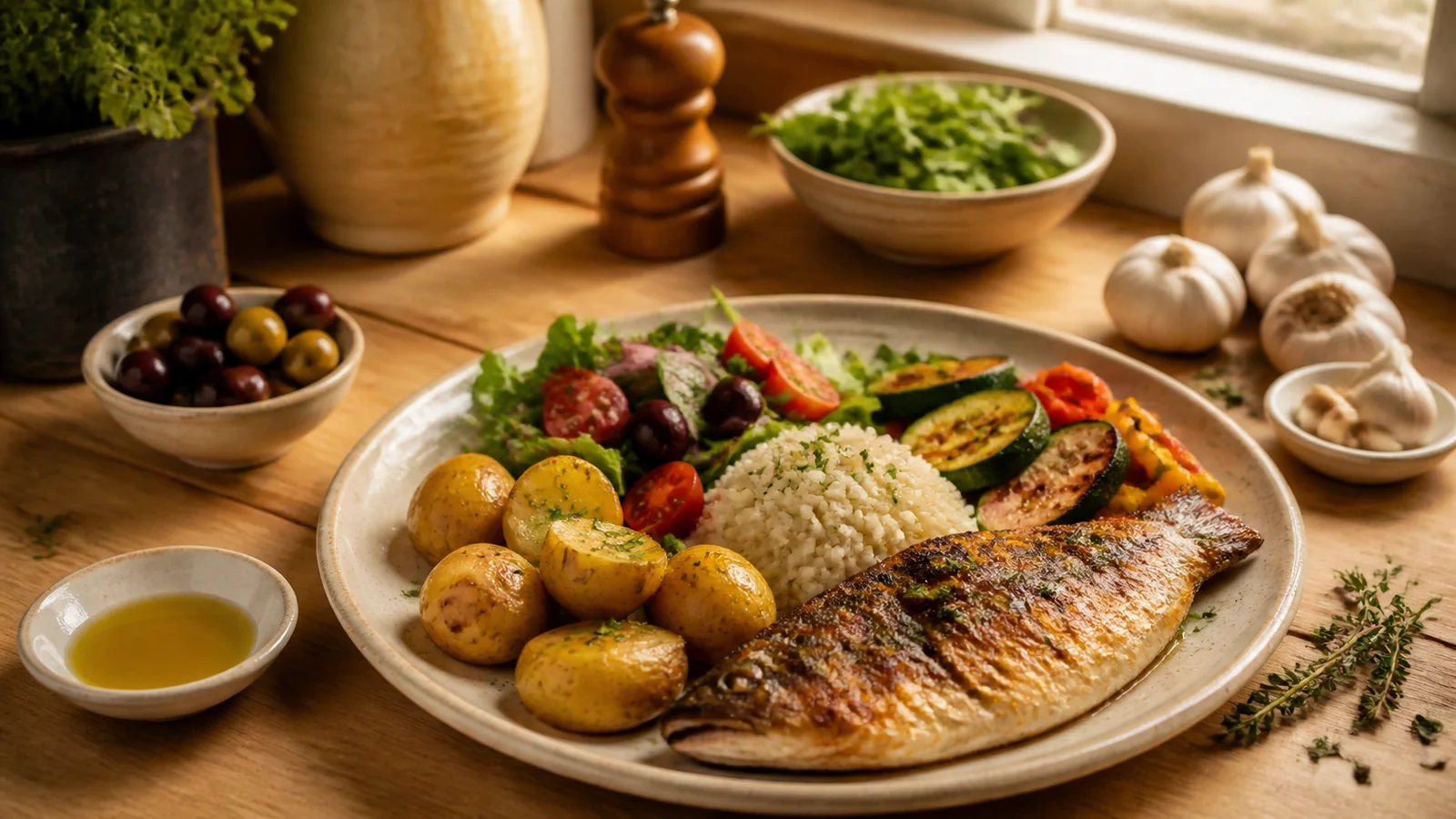
A balanced meal doesn’t require scales. Visually, half the plate should be vegetables, a quarter protein, and a quarter carbohydrates – this works for most Portuguese lunches and dinners. Olive oil, herbs, and fruit complete the set.
This article adapts recommendations from the Food Wheel and the plate method for dishes you already make: roasted sardines, bean rice, and cod with grains.
The 30-second method
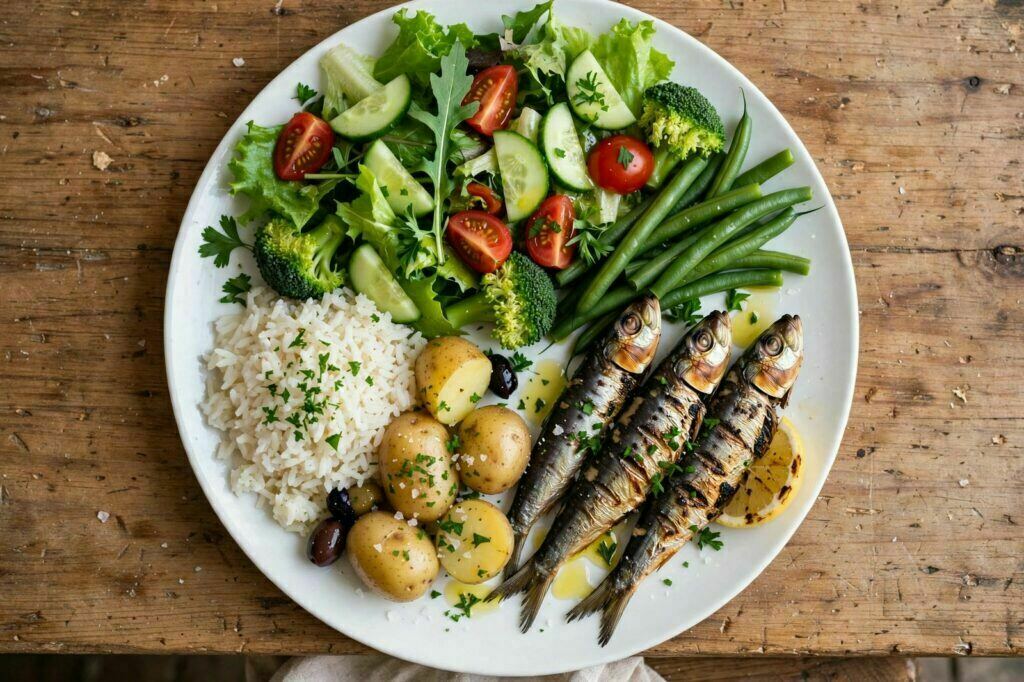
Imagine a 23 cm plate:
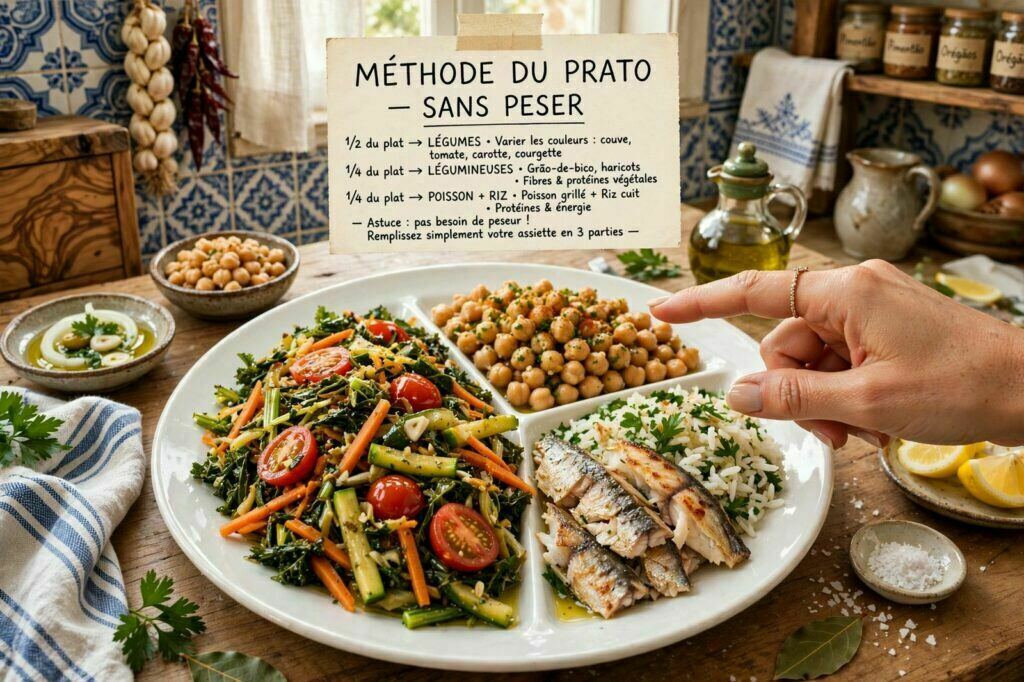
- 1/2 vegetables: salad, grilled food, rich soup, baked vegetables. Vary colour and texture.
- 1/4 protein: fish, eggs, legumes, meat in moderation.
- 1/4 slow-release carbohydrates: rice, potatoes, wholemeal pasta, cornbread, corn.
- Fat: 1 tablespoon of olive oil, a dose that fits in a cap.
- Water as the main drink.
It’s not a rigid rule. It’s a visual guide for everyday meals.
Portuguese examples that already work
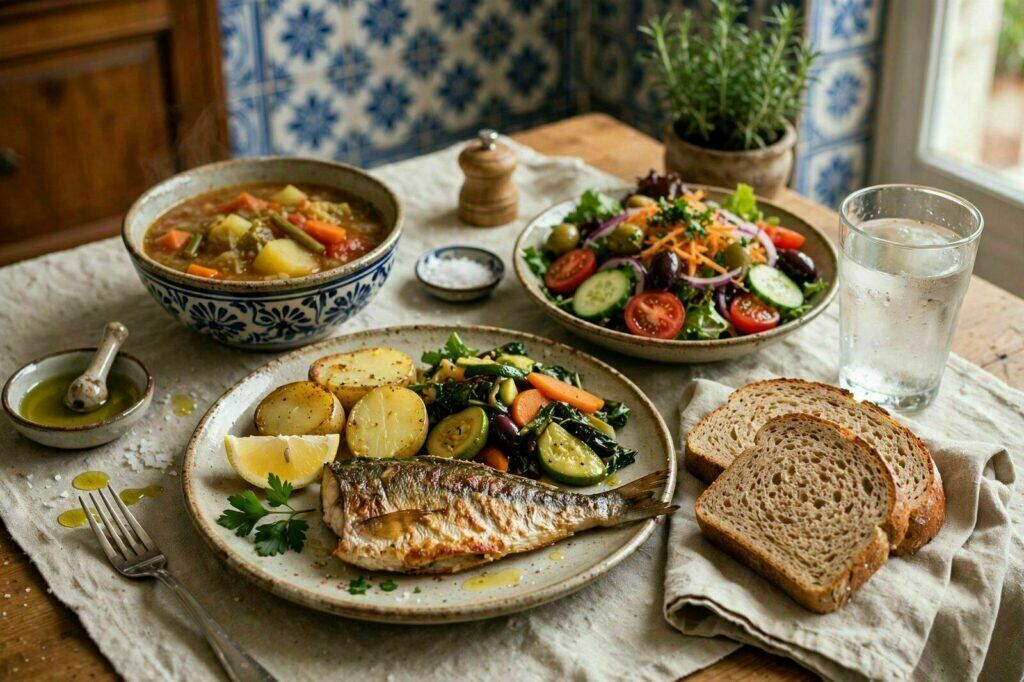
Baked sardines + potatoes + salad: sardines provide protein and good fat, potatoes provide carbohydrates, and salad provides vegetables. Add roasted pepper for colour.
Bean rice + cabbage + egg: beans count as both protein and carbohydrates. Adjust to 1/3 beans, 1/3 rice, and the remaining cabbage. Egg adds satiety.
Cod with grains + spinach: grains provide carbohydrates and fibre, cod provides protein, and sautéed spinach provides the vegetable half.
Green broth + cornbread + fruit: broth already provides vegetables and hydration, bread complements, and fruit finishes.
Realistic portions, no numbers
- Vegetables: two handfuls, raw or cooked.
- Protein: palm-sized portion of fish or meat, or a handful of cooked legumes.
- Carbohydrates: closed fist of cooked rice or a medium potato.
- Olive oil: 1 tablespoon. If you’ve already cooked with olive oil, you don’t need to add it.
The values presented are estimates calculated from the quantities indicated, not medical prescriptions.
How to make the dish more satiating
- Add fibre: grains, lentils, kale.
- Combine textures: crunchy salad + creamy puree.
- Use herbs instead of extra salt: parsley, coriander, bay leaf.
- Eat slowly. Signs of satiety take 15 to 20 minutes to appear.
What to avoid making a rule
- Don’t classify foods as prohibited. A pastel de nata fits into a varied diet, with conscious portions and frequency.
- Don’t replace meals with detox juice. It loses fibre and satiety.
- Don’t count calories at every meal if it causes anxiety. The visual method is sufficient for most people.
Key takeaway
A balanced Portuguese dish is flexible: it uses seasonal vegetables, available protein, and carbohydrates you already have at home. Adjust portions according to hunger, activity, and season.
Next: September products, vegetable protein with grain, and pantry organisation.