
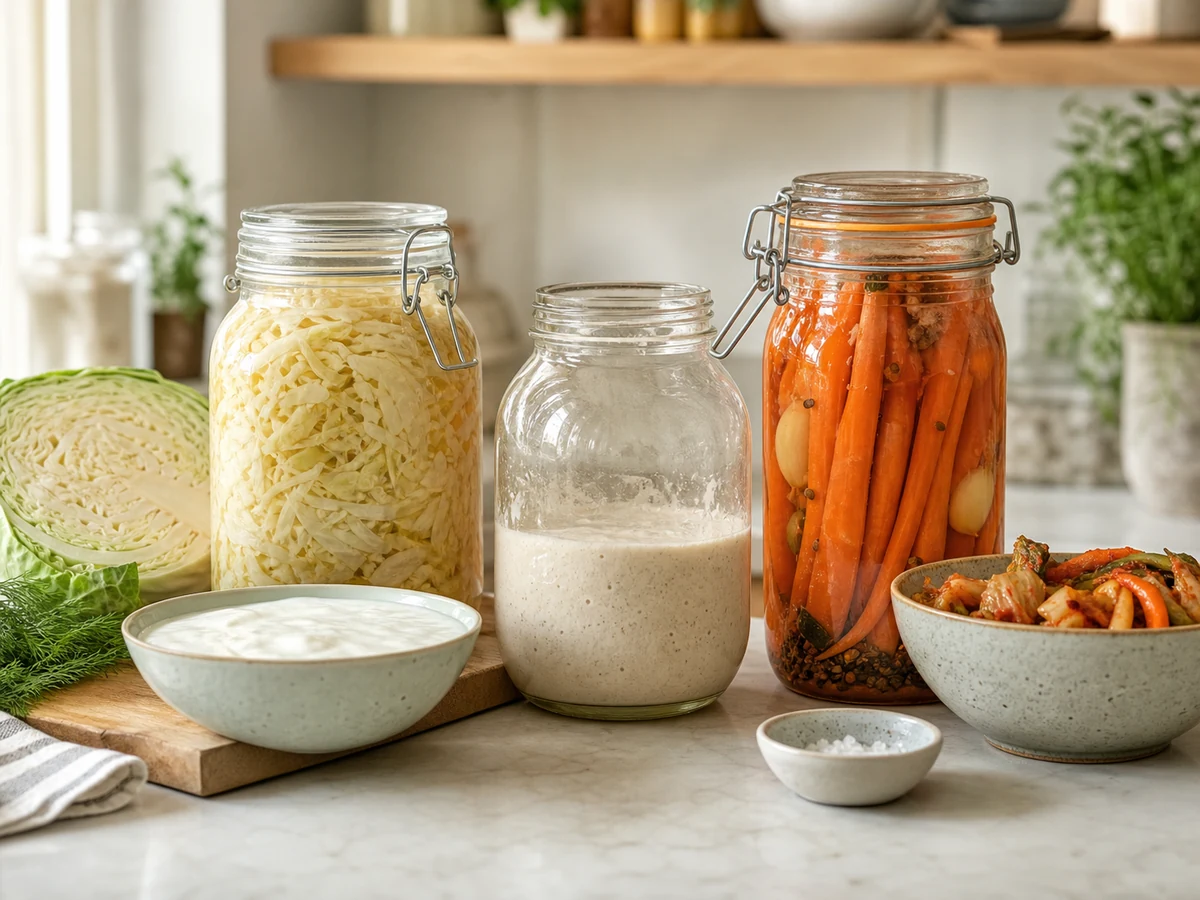
Home fermentation can be straightforward, but it should not be improvised. The salt ratio, hygiene, and submersion of the vegetables determine whether the result is safe, not just whether it tastes good.
Home fermentation can be straightforward, but it should not be improvised. The proportion of ingredients, hygiene, the container, and the submersion of the vegetables all influence the result and its safety. To begin, use recipes from reliable sources and do not reduce salt, acid, or timings without proper validation.
What is fermentation
In lactic fermentation, microorganisms naturally present convert sugars into acids. The increase in acidity alters the flavour, texture, and preservation.
Fermentation is not the same as vinegar preserves, nor does it replace sterilisation or canning processes.
Essential equipment
A glass jar or food-grade container, free from cracks.
A digital scale to weigh the vegetables and salt.
A fermentation weight or solution that keeps the vegetables below the brine.
A lid suitable for the method, clean utensils, and date labels.
Never use bin bags or plastics without food-grade certification in contact with food.
Safety rules that must not be ignored
Wash your hands, utensils, surfaces, and containers before starting.
Use fresh, firm vegetables with no signs of spoilage.
Weigh the ingredients and follow tested ratios. Do not reduce the salt simply out of preference.
Keep the vegetables submerged during fermentation and protect the container from insects and contamination.
If putrid odours, abnormal slimy texture, coloured moulds, or unmistakable signs of spoilage appear, discard without tasting.
Pregnant women, young children, the elderly, or immunocompromised individuals should take extra care and seek professional advice regarding unpasteurised fermented products.
Beginner recipe: simple fermented cabbage
Yield: 1 jar of approximately 1 litre.
Ingredients: 1 kg of clean, finely shredded white cabbage; 20 g of preserving salt or non-iodised salt without additives, following a ratio of 2% of the cabbage weight.
Preparation: weigh the cabbage once cleaned. Add the salt and massage until liquid is released. Place into the jar in small portions, pressing down to eliminate air pockets. The liquid must completely cover the cabbage.
Fermentation: keep the cabbage submerged with a suitable weight. Check daily and follow a tested recipe for time and temperature. Once it reaches the desired flavour within the recommended range, transfer to the fridge.
Important: this introductory recipe should not be used as a basis for improvising with other vegetables, brines, or low-acid ingredients.
What to observe during the process
Bubbles, a tangy aroma, and a gradual change in texture can all be part of normal fermentation.
A white surface film can have different origins and is difficult to assess by description alone. When in doubt, discard.
The absence of an unpleasant smell does not, on its own, guarantee the product is safe. For this reason, the method and recipe are more important than “trusting the smell”.
How to incorporate fermented foods into meals
Serve small amounts of fermented cabbage with sandwiches, bowls, meats, or legumes.
Use it as a tangy element, rather than heating it for long periods.
Combine it with simple foods so the flavour does not dominate the dish.
Recommended technical sources
National Center for Home Food Preservation: general information and suitable containers for home fermentation.
FoodSafety.gov: principles of hygiene, refrigeration, and groups at higher risk of foodborne illness.
ASAE: general principles of food hygiene and safety.