
In the height of summer, with no free microwave in the office and the packed lunch sitting out for hours, the result is almost always the same: limp leaves and suspicion about the protein. The solution isn’t to give up on the packed lunch: it’s to choose the right ingredients.
A well-planned cold packed lunch keeps safely for several hours out of the fridge, provided a few simple rules about acidity, moisture and the type of protein used are followed.
The golden rules of a safe cold packed lunch
- Acidity helps preserve. Lemon juice, vinegar and pickles lower the pH and hinder bacterial growth.
- Keep the wet separate from the dry. Ingredients that release water (tomato, cucumber) should sit on top or to the side, never at the bottom in direct contact with the base.
- Choose protein that holds up without chilling. Tinned tuna, hard-boiled egg, chickpeas and lupini beans last several hours better than thinly sliced ham or fresh cheese.
As a food safety reference from ASAE, always keep the packed lunch out of the so-called danger zone (between 4°C and 60°C) for as little time as possible, ideally no more than 4 hours.
What to avoid in a packed lunch without chilling
- Homemade mayonnaise or sauces with raw egg.
- Natural yoghurt as a dressing if it’s going to sit in the heat for hours.
- Seasoned rice left at room temperature for too long.
- Raw or undercooked fish.
The formula: base + stable protein + crunch
The simplest way to build a cold packed lunch is to think in three layers:
- Base: couscous, bulgur, quinoa, al dente pasta with olive oil, or chickpeas.
- Stable protein: drained tinned tuna, hard-boiled egg, roast chicken served thoroughly cold, lupini beans or lentils.
- Crunch and dry vegetables: toasted seeds, flaked almonds, raw pepper, grated carrot, whole cherry tomatoes, deseeded cucumber.
Combination ideas
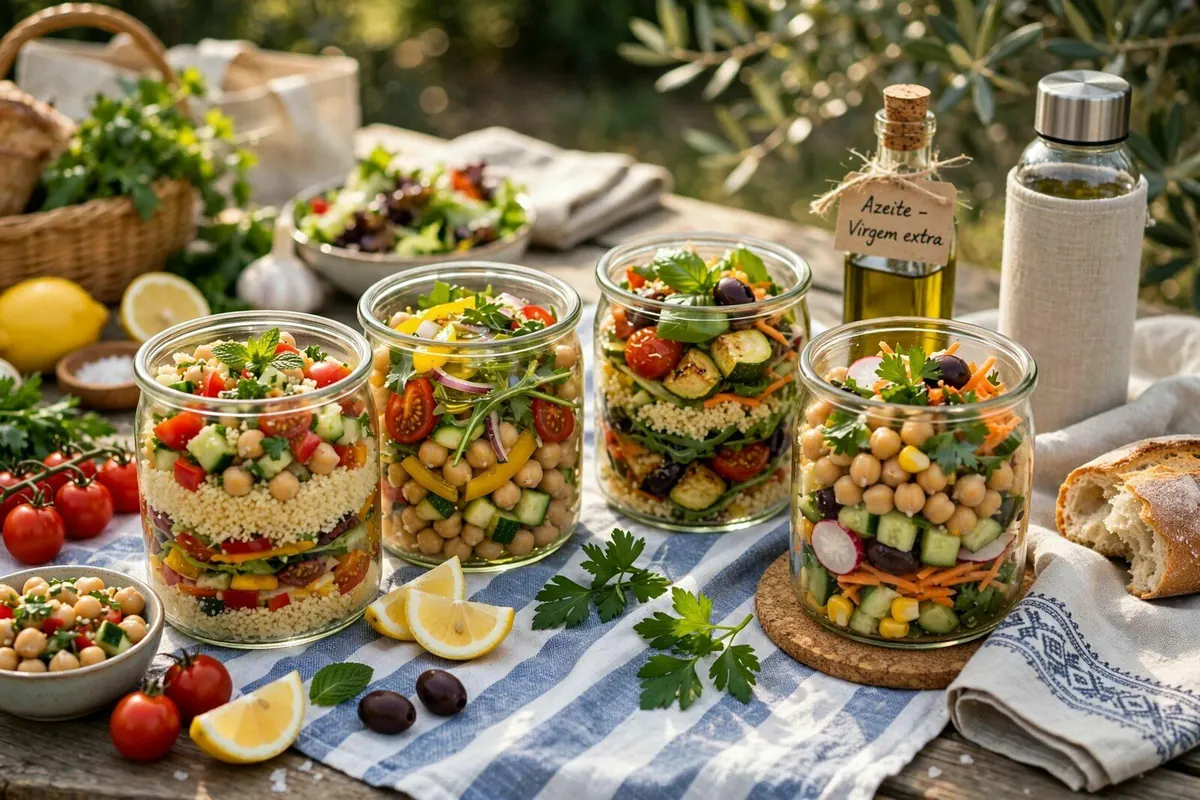
- Couscous, chickpeas, cherry tomatoes, cucumber, mint and lemon.
- Fusilli pasta, tuna, sweetcorn, red pepper and olives.
- Quinoa, shredded chicken, carrot, red cabbage and honey mustard.
- Chickpeas, lupini beans, sun-dried tomatoes, rocket and olive oil.
- Pasta, lentils, cold roasted beetroot, feta and walnuts.

Dressings that keep outside the fridge
Opt for simple vinaigrettes (olive oil, vinegar and lemon in a 3-1-1 ratio), honey and vinegar mustard, or tahini with lemon and water. Carry the dressing separately in a small jar and add it only at mealtime. Avoid cream or yoghurt-based sauces if the packed lunch will be exposed to the heat.

How to pack without a fridge
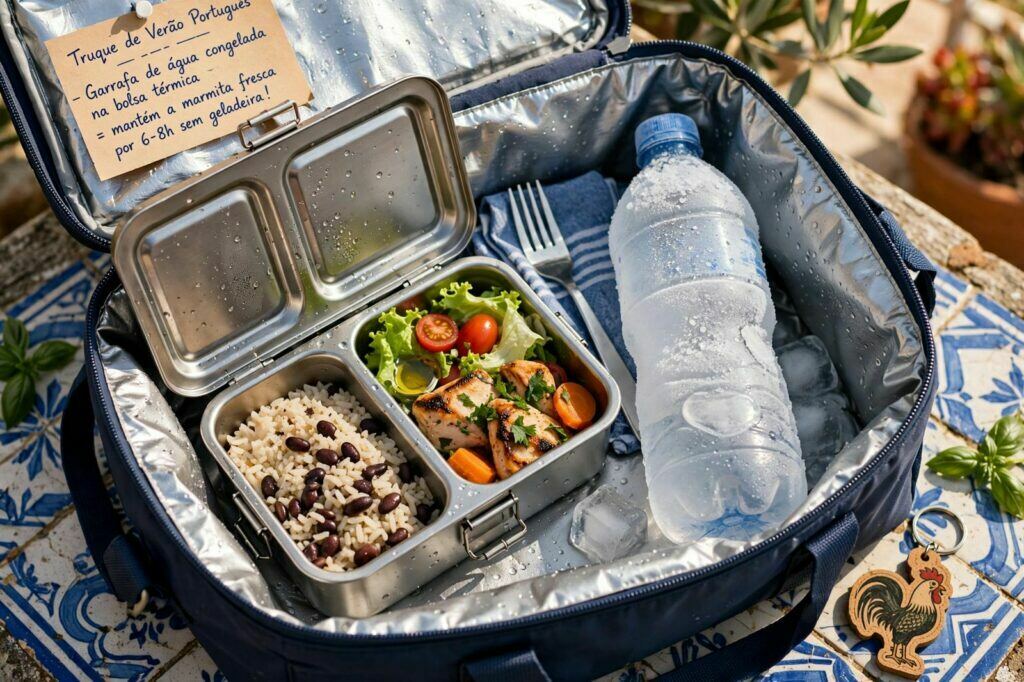
A glass jar with a good lid is the most practical option: it keeps the ingredients in separate layers and stops them from mixing during transport. An insulated bag with an ice pack extends the safety margin by a few extra hours. A bottle of water frozen the day before works as an improvised ice pack and, as it defrosts, it also provides cool drinking water. Never leave the packed lunch in the sun, for instance inside the car: always look for a shady spot.
Common mistakes
- Dressing the leaves in the morning: they go limp by lunchtime.
- Cutting the tomato too far in advance: it releases water and dampens the base.
- Sealing the packed lunch while the chicken is still warm: it creates condensation and extra moisture.