
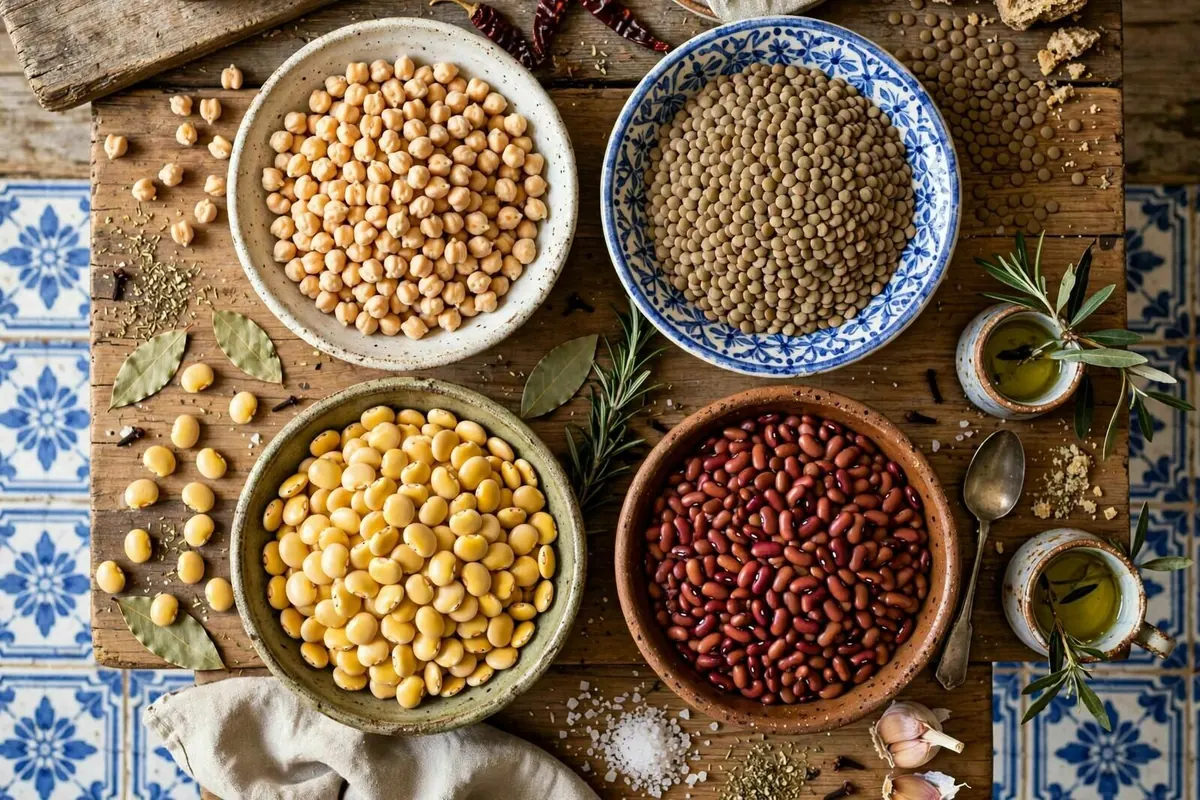
Plant protein doesn’t have to come from expensive, imported products. In Portugal, chickpeas, lupins, beans and lentils are affordable sources of protein, sold in any supermarket, and with centuries of tradition in Portuguese cooking.
This guide brings together the most common pulses, how to prepare them without complications, and some quick everyday recipes.
Why pulses are worth it
Comparing the cost per gram of protein, dried pulses such as chickpeas, lupins and lentils tend to be considerably more economical than animal sources such as meat or fish, even tinned tuna, which is already an affordable option. The price difference makes it sensible to include pulses regularly in your menu, not as a mandatory substitute, but as a wallet-friendly alternative.
How to soak and cook without excessive gas
- Soak the pulses in cold water for around 12 hours, changing the water at least once.
- Cook in fresh water, without salt, with a bay leaf to aid digestion.
- Add salt only at the end of cooking: salt from the start makes the skin firmer.
- Cumin, added at the end of cooking, helps reduce the feeling of gas.

5 quick recipes with pulses
- Warm chickpea salad with tuna and olives.
- Stewed lentils with carrot and tomato.
- Sautéed lupins with smoked paprika.
- Black-eyed beans with boiled egg and coriander.
- Crispy oven-roasted chickpeas, seasoned with olive oil and spices.

Storage and meal prep
Cooking a larger batch at once, for example, on a Sunday, allows you to keep it in the fridge for around 4 days and freeze the rest in portions. The cooking water, full of flavour, doesn’t need to go to waste: it makes a great base for soups.
Common mistakes
- Not soaking dried pulses before cooking, which considerably extends the cooking time.
- Adding salt from the start.
- Throwing away the soaking water without replacing it with fresh water before cooking.