
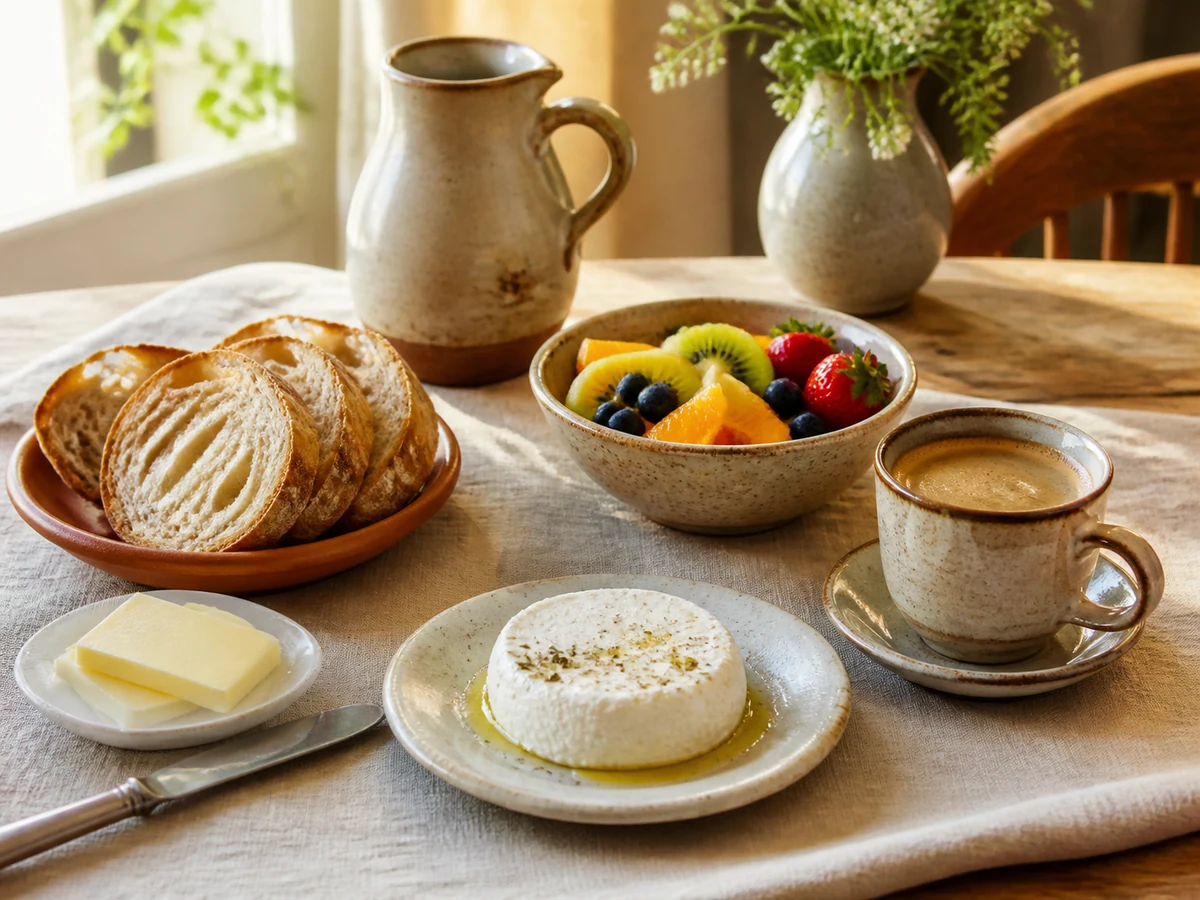
3 Portuguese breakfasts you need to try
Galão, half of milk or bica: each order has an exact name at the counter of a Portuguese café, and knowing this vocabulary avoids hesitations and misunderstandings.
In Portugal, breakfast is usually simpler than a brunch: bread, butter, cheese, coffee and, occasionally, pastries. This article presents three common ways to have breakfast outside the home, with the exact names that you will find at the counter of a Portuguese café.
1. Galão with toast
Galão is a coffee drink with a lot of milk, usually served in a tall glass. Portuguese toast is usually made with thicker bread, generously spread with butter.
How to order: “One galão and one piece of toast, please.”
Homemade version: prepare espresso or strong coffee, top up with hot milk and toast two thick slices of bread.
2. Half of milk with bread, cheese or ham
Half of milk approximates a balanced proportion between coffee and milk and is usually served in a cup. “Fiambre” is the Portuguese term for cooked ham.
How to order: “A half of milk and a bagel with cheese.”
Homemade version: use small, crusty bread, Flemish cheese or another mild cheese and, if you want, ham.
3. Bica with custard tart
In Lisbon, bica is a common way of ordering espresso. Pastel de nata can appear at breakfast, but it is also consumed as a snack or accompaniment to coffee throughout the day.
How to order: “A bica and a pastel de nata.” In other regions, simply asking for “a coffee” is usually enough.
Homemade version: serve short coffee with a warm custard tart and optional cinnamon.
Useful vocabulary
Cup: small container with a handle, used to serve coffee or tea.
Ham: cooked ham.
Bica: espresso coffee, especially in Lisbon.
Pingo: espresso with a small amount of milk.
Abatanado: longer and more diluted coffee, similar to an Americano.
What not to expect at every café
Eggs, bacon, pancakes and bowls are not part of the traditional everyday breakfast, although they are common in brunch spaces and tourist areas.
Names and quantities may vary between regions and establishments. When in doubt, look at the counter or ask.