
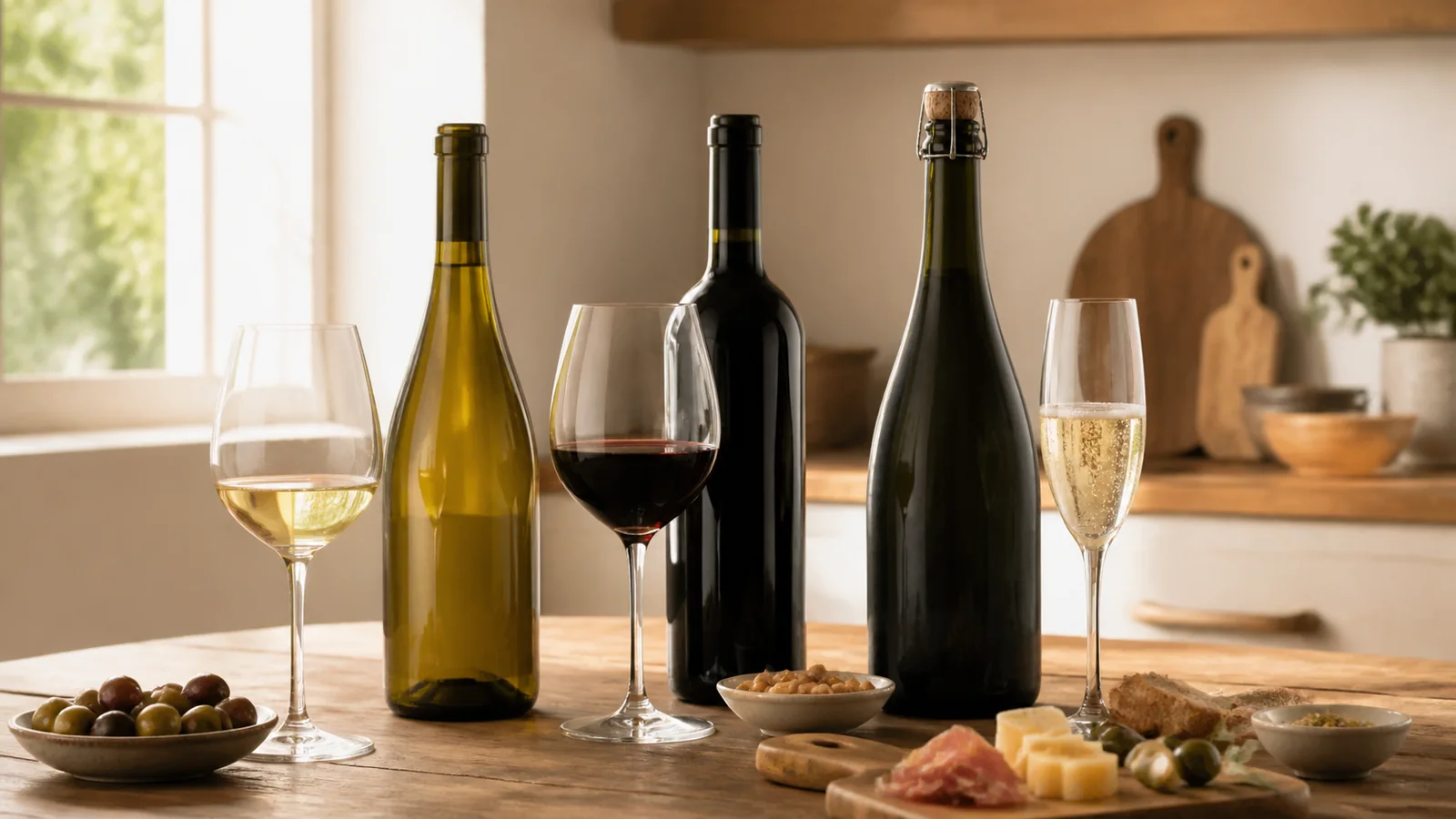
3 affordable Portuguese wines for every occasion
Affordable wine is not the same as weak wine. A fresh white Vinho Verde, a versatile red and a well-chosen sparkling wine cover most everyday meals without breaking the bank.
Choosing an affordable wine does not mean simply looking for the cheapest bottle. The aim is to identify regions, grape varieties and styles with reliable quality, easy to find and suited to different meals. As prices and availability vary by shop and promotion, this guide recommends wine profiles rather than specific brands.
1. White Vinho Verde: fresh and simple for starters
Profile to look for: young white, with marked acidity, moderate alcohol and citrus or floral notes.
Common grape varieties: Loureiro, Arinto, Trajadura or regional blends. Alvarinho tends to have more structure and can be pricier.
Food pairing: salads, grilled fish, seafood, cod fritters, fresh cheese and snacks.
How to choose: prefer recent vintages and check that the bottle has been protected from heat and light.
2. Red from the Dão: versatility for the table
Profile to look for: medium-bodied red, red fruit, balanced acidity and discreet or no oak.
Common grape varieties: Touriga Nacional, Alfrocheiro, Jaen and Tinta Roriz.
Food pairing: roast meats, duck rice, mushrooms, oven-baked dishes and cheeses without excessive ageing.
How to choose: look for a producer or cooperative with clear information about the grape varieties and the vintage.
3. Sparkling wine from Bairrada: an affordable option for celebrating
Profile to look for: brut, dry sparkling wine, with a fine bubble and enough acidity to accompany food.
Common grape varieties: Baga, Bical, Maria Gomes and Arinto, depending on the style.
Food pairing: suckling pig, fried foods, seafood, savoury starters and desserts that are not too sweet.
How to choose: check for the indication “brut” if you do not want a sweet profile.
Criteria for comparing bottles
Occasion: aperitif, main meal or celebration.
Sweetness: dry, medium-dry or sweet.
Structure: light, medium or full-bodied.
Serving temperature: whites and sparkling wines chilled; medium-bodied reds slightly below room temperature in warm homes.
Value for money: label information, storage, producer and suitability to the dish matter more than individual medals.
Responsible drinking note
Also serve water and alcohol-free alternatives.
Consumption should be reserved for adults and adjusted to individual circumstances.
In situations such as driving, pregnancy, incompatible medication or a personal decision not to drink, choose an alcohol-free alternative.